
Male Infertility Testing In Raipur – Dr. Ankita Malewar
Dr. Ankita Malewar provides comprehensive Male Infertility Testing In Raipur through advanced semen analysis, hormonal evaluation, ultrasound assessment, fertility counseling, and personalized diagnostic planning. Her goal is to identify the root cause of infertility and develop targeted treatment strategies that help couples achieve successful conception.
Male infertility affects a significant number of couples who struggle to achieve pregnancy despite regular unprotected intercourse. While infertility is often associated with female reproductive health, male factors contribute to nearly half of all infertility cases. Therefore, accurate and timely male infertility testing plays a crucial role in identifying fertility problems and guiding appropriate treatment. Male infertility may result from low sperm count, poor sperm motility, abnormal sperm morphology, hormonal imbalances, reproductive tract blockages, genetic conditions, or lifestyle-related factors.
If pregnancy has not occurred after one year of regular unprotected intercourse, fertility specialists recommend a comprehensive fertility evaluation for both partners. Male infertility testing helps determine whether sperm production, sperm function, or sperm delivery issues are affecting conception. Early diagnosis often leads to more effective treatment and improved reproductive outcomes.
Why Male Infertility Testing In Raipur Is Important
Many couples focus primarily on female fertility during the initial stages of infertility evaluation. However, fertility specialists strongly recommend assessing both partners because male factors contribute substantially to infertility cases. Accurate testing allows specialists to identify reproductive problems early and avoid unnecessary treatment delays.
Male infertility testing provides valuable information about sperm health, reproductive function, hormonal balance, and overall fertility potential. Without proper evaluation, underlying fertility problems may remain undiagnosed for years. Comprehensive testing helps determine whether fertility issues involve sperm production, sperm transport, ejaculation, hormonal regulation, or structural abnormalities.
Additionally, fertility testing helps specialists recommend the most appropriate treatment options. Some men may benefit from medication and lifestyle modifications, while others may require surgical correction or advanced reproductive treatments such as IUI, IVF, or ICSI. Early diagnosis allows fertility specialists to create personalized treatment plans that maximize reproductive success.
Who Should Consider Male Infertility Testing In Raipur?
Male infertility testing is recommended for couples who have been trying to conceive for more than one year without success. Men should also seek fertility evaluation sooner if they have known reproductive health concerns or risk factors that may affect fertility.
Certain medical conditions increase the likelihood of fertility problems. Men with a history of undescended testicles, testicular injury, reproductive infections, hormonal disorders, chemotherapy, radiation therapy, or reproductive surgery may benefit from earlier evaluation. Men experiencing erectile dysfunction, ejaculation difficulties, reduced libido, or testicular discomfort should also consider fertility testing.
Lifestyle factors such as smoking, obesity, excessive alcohol consumption, chronic stress, exposure to environmental toxins, and prolonged heat exposure can negatively affect sperm production and reproductive health. Fertility testing helps determine whether these factors have impacted fertility potential and guides appropriate treatment recommendations.
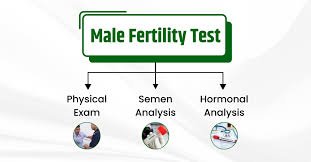
Comprehensive Medical History and Physical Examination
Male infertility testing begins with a detailed review of medical history and reproductive health. Fertility specialists gather information regarding previous illnesses, surgeries, medications, lifestyle habits, occupational exposures, sexual health, and fertility history.
A comprehensive physical examination helps identify potential reproductive abnormalities. Specialists evaluate testicular size, structure, and overall reproductive anatomy. They also assess signs of hormonal imbalance, varicocele, reproductive tract abnormalities, and other conditions that may affect fertility.
This initial assessment provides important diagnostic clues and helps guide further testing. A thorough medical evaluation often reveals underlying factors that contribute to infertility and supports the development of an individualized diagnostic plan. Comprehensive history-taking and physical examination remain essential components of effective fertility assessment.
Semen Analysis: The Foundation of Male Infertility Testing In Raipur
Semen analysis remains the most important test in male fertility evaluation. Fertility specialists use semen analysis to assess sperm concentration, sperm motility, sperm morphology, semen volume, and overall sperm quality. The test provides valuable information regarding reproductive potential and serves as the foundation for further fertility assessment.
During the procedure, the laboratory evaluates the number of sperm present in each milliliter of semen, the percentage of moving sperm, and the shape of individual sperm cells. These factors directly influence the ability of sperm to reach and fertilize an egg.
Because sperm quality can vary naturally, fertility specialists often recommend repeating the test to confirm results. Multiple analyses provide a more accurate picture of reproductive health and help ensure reliable diagnosis. Semen analysis remains one of the most effective and informative tools for identifying male fertility problems.
Hormonal Testing for Male Fertility Evaluation
Hormonal balance plays a critical role in sperm production and reproductive function. Fertility specialists often recommend hormonal testing when semen analysis reveals abnormalities or when symptoms suggest endocrine dysfunction.
Hormonal evaluation typically measures testosterone, follicle-stimulating hormone (FSH), luteinizing hormone (LH), prolactin, and other reproductive hormones. These hormones regulate testicular function, sperm production, and overall reproductive health.
Abnormal hormone levels may indicate problems involving the pituitary gland, hypothalamus, or testes. Hormonal testing helps specialists determine whether endocrine disorders contribute to infertility and whether medical treatment may improve reproductive outcomes.
Accurate hormonal assessment supports personalized treatment planning and helps fertility specialists identify reversible causes of infertility that may respond to medication and lifestyle modification.
Ultrasound and Advanced Diagnostic Testing
Ultrasound imaging provides detailed information about reproductive anatomy and helps identify structural abnormalities that may affect fertility. Scrotal ultrasound can detect conditions such as varicocele, testicular abnormalities, cysts, and reproductive tract obstruction.
Varicocele remains one of the most common correctable causes of male infertility. Ultrasound allows specialists to evaluate blood flow and identify enlarged veins that may negatively affect sperm production. Imaging studies also help assess testicular health and reproductive function.
In selected cases, fertility specialists may recommend additional investigations such as genetic testing, chromosome analysis, sperm DNA fragmentation testing, or testicular biopsy. These advanced diagnostic tools provide further insight into complex fertility problems and support more precise treatment planning.
Understanding Male Infertility Test Results
Once testing is complete, fertility specialists review the findings and explain their significance. Test results help identify whether infertility results from sperm production problems, sperm transport issues, hormonal abnormalities, or structural conditions affecting reproductive health.
Low sperm count, known as oligospermia, occurs when sperm concentration falls below normal levels. Reduced sperm motility limits the ability of sperm to reach the egg, while abnormal morphology may affect fertilization. Hormonal abnormalities and reproductive tract blockages can also contribute to infertility.
Understanding these findings helps couples make informed decisions regarding treatment options. Fertility specialists use diagnostic results to develop targeted treatment plans that improve reproductive health and maximize the chances of conception.\
Why Choose Dr. Ankita Malewar for Male Infertility Testing In Raipur?
Dr. Ankita Malewar offers comprehensive fertility evaluation and evidence-based reproductive care for couples facing infertility challenges. She provides detailed male fertility assessment through semen analysis, hormonal evaluation, ultrasound examination, and personalized diagnostic planning.
Her patient-centered approach focuses on identifying the exact cause of infertility and developing individualized treatment strategies. Through advanced fertility testing and comprehensive reproductive care, she helps patients understand their fertility status and explore effective treatment options.
Patients benefit from accurate diagnosis, personalized guidance, and access to modern fertility treatments designed to improve reproductive outcomes and support successful parenthood.
Frequently Ask Questions (FAQ)
What is male infertility testing?
Male infertility testing includes semen analysis, hormonal evaluation, physical examination, ultrasound imaging, and other investigations used to assess male reproductive health.
When should I undergo male infertility testing?
You should consider testing if pregnancy has not occurred after one year of regular unprotected intercourse or sooner if you have known fertility concerns.
Is semen analysis the most important fertility test?
Yes. Semen analysis is usually the first and most important test used to evaluate male fertility.
How many semen analyses are needed?
Many fertility specialists recommend two or more tests because sperm parameters can vary naturally over time.
Can low sperm count be detected through testing?
Yes. Semen analysis accurately measures sperm concentration and helps diagnose low sperm count.
What happens if male infertility is diagnosed?
Treatment may include medications, lifestyle modifications, hormonal therapy, surgery, IUI, IVF, or ICSI depending on the cause.
Why choose Dr. Ankita Malewar for male infertility testing in Raipur?
Dr. Ankita Malewar provides comprehensive fertility evaluation, advanced diagnostic testing, personalized treatment planning, and compassionate reproductive care for couples facing infertility challenges.
Book an Appointment for Male Infertility Testing In Raipur
If you have been trying to conceive without success, professional fertility evaluation can provide valuable answers and guide the next steps in your fertility journey.
Dr. Ankita Malewar offers semen analysis, hormonal testing, ultrasound evaluation, fertility counseling, male infertility assessment, and advanced reproductive care in Raipur.
Book your appointment today and take the first step toward understanding your fertility health and improving your chances of successful conception.
At Dr. Ankita Malewar’s Women Care Clinic, Nagpur, patients receive personalized gynecological consultation, advanced diagnosis, and expert guidance for women’s health concerns.
Follow Us For Wellness Tips
- Additionally
- Again
- Also
- And
- As a result
- At first
- At last
- At the same time
- Because
- Before
- Besides
- Certainly
- Comparatively
- Consequently
- Conversely
- Despite this
- During
- Earlier
- Equally
- Especially
- Even so
- Eventually
- Finally
- First
- Firstly
- For example
- For instance
- Furthermore
- Hence
- However
- In addition
- In conclusion
- In contrast
- In fact
- In other words
- In short
- In the meantime
- In the same way
- Indeed
- Instead
- Last
- Lastly
- Likewise
- Meanwhile
- Moreover
- Namely
- Nevertheless
- Next
- Nonetheless
- Now
- On the contrary
- On the other hand
- Overall
- Particularly
- Previously
- Rather
- Similarly
- Since
- So
- Specifically
- Still
- Subsequently
- Such as
- Then
- Therefore
- Thus
- To begin with
- To clarify
- To conclude
- To demonstrate
- To emphasize
- To explain
- To illustrate
- To put it differently
- To summarize
- Ultimately
- Undoubtedly
- Unlike
- Until
- Usually
- Whereas
- While
- Yet