
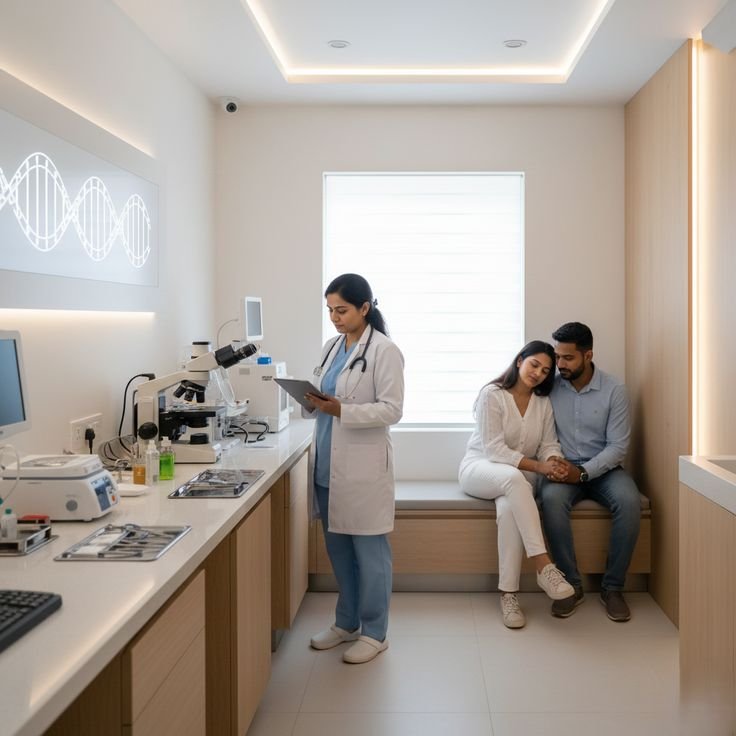
IVF Center In Raipur | Women's Care Clinic
If you are searching for the best IVF Center in Raipur, choosing an experienced fertility specialist and an advanced fertility center can make a significant difference in your parenthood journey. In Vitro Fertilization (IVF) has transformed fertility treatment and helped millions of couples worldwide achieve successful pregnancies. IVF offers hope to couples facing infertility due to blocked fallopian tubes, ovulation disorders, endometriosis, male infertility, unexplained infertility, and other reproductive challenges.
IVF involves fertilizing an egg with sperm in a specialized laboratory and transferring the resulting embryo into the uterus. Fertility specialists carefully monitor every stage of the treatment to maximize the chances of conception. As fertility technology continues to advance, IVF success rates continue to improve, giving couples greater confidence in their treatment journey.
Dr. Ankita Malewar provides comprehensive fertility evaluation, advanced IVF treatment, and personalized reproductive care in Raipur. She focuses on accurate diagnosis, individualized treatment planning, and evidence-based fertility solutions that help couples achieve their dream of parenthood.
What Is IVF Treatment?
IVF stands for in vitro fertilization. During IVF treatment, doctors retrieve eggs from the ovaries and combine them with sperm in a laboratory to create embryos. The fertility team can then transfer a suitable embryo into the uterus according to the individual treatment plan.
IVF does not represent the same treatment for every patient. Doctors consider factors such as age, ovarian function, reproductive history, sperm parameters, fallopian-tube condition, uterine health, previous fertility treatment, and the cause and duration of infertility.
A systematic fertility evaluation helps identify the factors that may influence treatment. ASRM recommends evaluating ovulatory function, the female reproductive tract, tubal patency, and semen parameters when applicable.
Therefore, choosing an IVF Center In Raipur should involve more than simply looking for an IVF procedure. Couples should receive appropriate evaluation, clear treatment information, and individualized fertility guidance.
Who May Need IVF Treatment?
Several reproductive conditions can make IVF an appropriate treatment option. Women with blocked or damaged fallopian tubes may require assisted reproduction because the tubes play an important role in natural fertilization.
Ovulation disorders can also make conception difficult. Some women experience irregular or absent ovulation because of hormonal or other reproductive conditions. A doctor can investigate the underlying cause before recommending fertility treatment.
Male-factor infertility can also contribute to difficulty conceiving. Changes in sperm concentration, movement, or morphology may affect fertilization. In some situations, IVF or related assisted reproductive techniques may form part of the treatment plan.
Endometriosis, reduced ovarian reserve, previous fertility treatment, age-related fertility changes, and unexplained infertility can also lead couples to discuss IVF with a fertility specialist.
However, IVF is not automatically necessary for every couple with infertility. The appropriate treatment depends on the individual diagnosis and reproductive circumstances.
Fertility Evaluation Before IVF
A detailed fertility evaluation provides an important foundation for IVF planning. The doctor reviews menstrual history, previous pregnancies, miscarriages, medical conditions, previous surgeries, medications, reproductive history, and the duration of attempts to conceive.
Depending on the patient’s circumstances, the evaluation may include blood tests, ultrasound, ovarian reserve assessment, evaluation of the uterus and fallopian tubes, and semen analysis.
ASRM recommends that fertility evaluation consider ovulation, reproductive anatomy, tubal patency, and male-factor infertility when applicable. When a male partner contributes sperm, evaluation of both partners can begin at the same time.
This approach can help doctors identify conditions that may require treatment before IVF. For example, some women may have uterine abnormalities that require hysteroscopic treatment, while others may have ovarian, tubal, or pelvic conditions that need further evaluation.
IVF For Female Infertility | IVF Center In Raipur
Female infertility can develop because of several reproductive factors. Ovulation problems, tubal disorders, endometriosis, uterine abnormalities, reduced ovarian reserve, and age-related changes can influence the ability to conceive.
Some conditions require medical treatment, while others may benefit from minimally invasive gynecological procedures. In selected cases, doctors may treat a reproductive condition before proceeding with assisted reproduction.
For example, an endometrial polyp, uterine septum, or intrauterine adhesion may require evaluation and treatment when clinically indicated. Addressing an identified uterine problem can form part of an individualized fertility plan.
A detailed assessment allows the doctor to determine whether IVF should be considered immediately or whether another fertility treatment or gynecological procedure may be appropriate first.
IVF And Male-Factor Infertility | IVF Center In Raipur
Fertility care should consider both partners when applicable. Male-factor infertility can contribute independently to difficulty conceiving or occur alongside female reproductive factors.
A semen analysis can provide information about sperm concentration, motility, and morphology. The doctor may recommend additional evaluation depending on the results and medical history.
Treatment options vary according to the underlying cause. Some couples may require medical management, while others may consider intrauterine insemination, IVF, or IVF with intracytoplasmic sperm injection when clinically appropriate.
Evaluating both partners helps create a more complete fertility picture and can prevent unnecessary delays in treatment. ASRM specifically recommends parallel evaluation of the male partner when applicable.
IVF Treatment Process | IVF Center In Raipur
The IVF process usually involves several stages. However, the exact protocol can differ according to the patient’s age, ovarian reserve, previous treatment, medical history, and response to fertility medication.
The process may begin with ovarian stimulation. Fertility medicines encourage the development of multiple ovarian follicles. The medical team monitors the response through ultrasound and, when appropriate, blood tests.
When the follicles reach the appropriate stage, the fertility team plans egg retrieval. The collected eggs can then undergo fertilization with sperm in a laboratory.
The resulting embryos remain under laboratory observation as they develop. Depending on the treatment plan, the fertility team may transfer an appropriate embryo into the uterus or freeze embryos for later use.
Doctors individualize embryo-transfer decisions according to the patient’s clinical circumstances. Couples should receive clear information about the treatment process, possible risks, expected timelines, and available alternatives.
Importance Of Uterine Health During IVF
The uterus plays an important role in embryo implantation and pregnancy. Certain abnormalities within the uterine cavity can affect reproductive health and may require assessment before fertility treatment.
Possible uterine conditions include endometrial polyps, intrauterine adhesions, uterine septum, and selected fibroids. Doctors may use ultrasound, hysteroscopy, or other investigations when clinically indicated.
Dr. Ankita Malewar has experience with hysteroscopic procedures including endometrial polypectomy, septum resection, and Asherman’s adhesiolysis. These procedures can form part of fertility care when the patient has a diagnosed uterine condition that requires treatment.
Not every fertility patient requires hysteroscopy or surgery. The doctor should recommend the procedure according to the patient’s symptoms, examination findings, imaging results, reproductive history, and overall treatment plan.
Fertility-Enhancing Surgery Before IVF
Some women require treatment for an underlying gynecological condition before they proceed with IVF. Fertility-enhancing surgery may form part of the treatment plan when the doctor identifies a condition that could affect reproductive health.
Dr. Ankita Malewar performs and promotes minimally invasive procedures such as fertility-enhancing surgeries, hysteroscopy, laparoscopic procedures, and selected laparoscopic ovarian and uterine surgeries.
Her listed procedures include laparoscopic myomectomy, laparoscopic ovarian cystectomy, hysteroscopy, endometrial polypectomy, septum resection, Asherman’s adhesiolysis, and lateral metroplasty.
The purpose of fertility-related surgery depends on the individual diagnosis. Surgery does not guarantee pregnancy, and the doctor should discuss expected benefits, risks, limitations, and alternatives before treatment.
Laparoscopic Surgery And Fertility | IVF Center In Raipur
Laparoscopic surgery, often called keyhole surgery, uses small incisions and specialized instruments to perform selected gynecological procedures.
Depending on the diagnosis, laparoscopic surgery may help treat conditions involving the uterus, ovaries, or pelvis. Dr. Ankita Malewar has specialized training in gynecological endoscopic and laparoscopic surgery and advanced laparoscopic procedures.
Her surgical experience includes laparoscopic myomectomy and laparoscopic ovarian cystectomy, along with fertility-enhancing procedures and other gynecological surgeries.
Minimally invasive surgery may offer benefits such as smaller surgical incisions and recovery considerations compared with some open procedures. However, the appropriate surgical technique depends on the patient’s condition, procedure, and overall health.
Choosing An IVF Center In Raipur
When searching for an IVF Center In Raipur, couples should consider the complete fertility-care process rather than focus only on IVF treatment.
A comprehensive fertility service should begin with an appropriate evaluation and explain why a particular treatment may suit the patient’s circumstances. Couples should also receive information about investigations, treatment stages, possible risks, alternatives, and expected timelines.
It can also be useful to understand whether the fertility-care plan considers both partners and whether associated gynecological conditions receive appropriate evaluation.
Fertility treatment can involve emotional, physical, and financial considerations. Clear communication and individualized treatment planning can help patients understand each stage of their fertility journey.
Why Choose Dr. Ankita Malewar For Fertility Care?
Dr. Ankita Malewar has an academic background in Obstetrics and Gynecology along with specialized training in gynecological endoscopic and laparoscopic surgery.
She completed her MBBS from GMCH, Nagpur, in 2007 and her M.S. in Obstetrics and Gynecology from the same college during 2014–2017.
She subsequently pursued FMAS training in gynecological endoscopic and laparoscopic surgeries through Maharashtra University of Health Sciences at Omega Hospital during 2017–2018.
In 2019, she received training in advanced laparoscopic surgeries and retroperitoneal dissections at Inspiria Hospital under the guidance of Dr. Niteen Ghorpade.
Her surgical experience includes fertility-enhancing procedures, hysteroscopies, endometrial polypectomy, septum resection, Asherman’s adhesiolysis, lateral metroplasty, laparoscopic myomectomy, and laparoscopic ovarian cystectomy.
This combination of gynecological and minimally invasive surgical training can be relevant for women whose fertility concerns involve an underlying gynecological condition.
Personalized Fertility Care At Women's Care Clinic
Every fertility journey is different. Some women may require evaluation for ovulation problems, while others may have tubal, uterine, ovarian, or pelvic conditions.
Similarly, male-factor infertility may contribute to difficulty conceiving and may require assessment alongside the woman’s fertility evaluation.
For this reason, fertility treatment should begin with an individualized consultation. The doctor can review the couple’s reproductive history, previous investigations, medical conditions, and treatment goals before recommending the next step.
IVF may form an important part of fertility treatment for selected patients. However, appropriate fertility care focuses first on understanding the factors affecting conception and then selecting a suitable treatment approach.
IVF Center In Raipur For Individualized Fertility Guidance
Women and couples searching for an IVF Center In Raipur may have very different fertility concerns. Some may already have an infertility diagnosis, while others may need their first fertility evaluation.
A consultation can help identify possible causes of difficulty conceiving and determine whether further investigations are necessary.
Women with conditions affecting the uterus, ovaries, fallopian tubes, or pelvic structures may also require gynecological treatment as part of their fertility plan.
Women’s Care Clinic provides personalized gynecological care, fertility evaluation, and treatment guidance. Dr. Ankita Malewar’s experience in minimally invasive gynecological surgery and fertility-enhancing procedures can support women who require evaluation or treatment for associated gynecological conditions.
The treatment plan should always reflect the patient’s medical findings, reproductive goals, and individual circumstances.
When Should You Consult A Fertility Specialist?
Infertility is generally defined as the inability to achieve pregnancy after 12 months or more of regular unprotected sexual intercourse.
Women younger than 35 may generally begin infertility evaluation after 12 months of trying to conceive when there are no known fertility problems. Women aged 35 or older may benefit from evaluation after six months, while women over 40 may need more immediate assessment.
You should also consider earlier consultation if you have irregular or absent periods, suspected endometriosis, previous pelvic surgery, known tubal problems, recurrent pregnancy loss, or a known fertility-related condition.
Early evaluation can help identify possible causes and provide a clearer understanding of available treatment options.
Book an Appointment - IVF Center In Raipur
If you have been struggling to conceive naturally or have experienced unsuccessful fertility treatments, professional IVF consultation can help you explore effective reproductive options. Early fertility evaluation often improves treatment outcomes and expands available solutions.
Dr. Ankita Malewar offers advanced IVF treatment, fertility assessment, embryo transfer services, fertility preservation, and comprehensive reproductive care in Raipur. She provides personalized treatment plans designed to maximize fertility potential and improve pregnancy outcomes.
Frequently Asked Questions
What is an IVF Center?
An IVF center provides assisted reproductive services such as in vitro fertilization along with fertility evaluation and related reproductive treatments. The exact services vary between centers.
Who may need IVF treatment?
Doctors may consider IVF for selected cases involving blocked fallopian tubes, certain ovulation problems, male-factor infertility, endometriosis, unexplained infertility, or other reproductive conditions.
When should I visit an IVF specialist?
Women younger than 35 generally receive infertility evaluation after 12 months of trying to conceive. Women aged 35 or older may benefit from evaluation after six months, while women over 40 may require earlier assessment.
Does IVF treatment require evaluation of both partners?
When a male partner contributes sperm, fertility evaluation should generally consider both partners. Semen analysis forms an important part of male-factor assessment.
What tests are performed before IVF?
Depending on the patient’s circumstances, doctors may evaluate ovulation, ovarian reserve, uterine anatomy, fallopian-tube patency, and semen parameters. The exact tests depend on the individual case.
Can fibroids affect fertility?
Some fibroids can affect reproductive health depending on their location, size, and relationship to the uterine cavity. A gynecological assessment can determine whether treatment is appropriate.